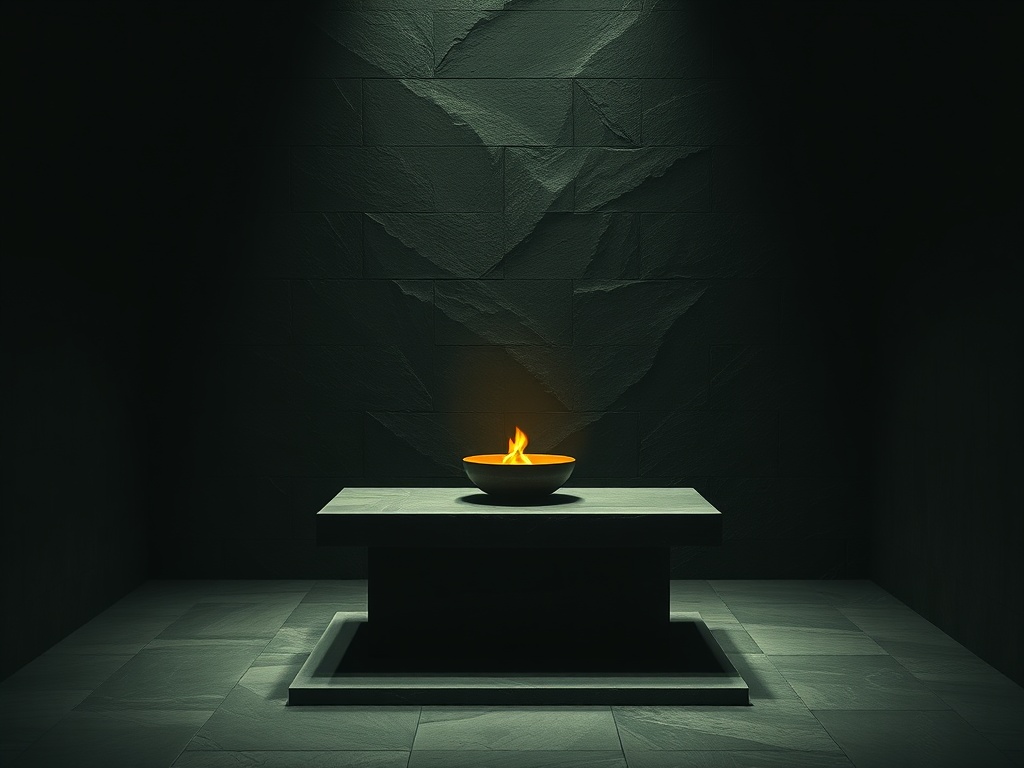
There is a sound an altar makes when the sacrifice has been laid but the fire has gone out — and no one has bothered to relight it. It is not the sound of a Church that has abandoned God. It is the sound of a Church that has stopped burning. And Jesus — standing at the door of that kind of Church — said what He is still saying this hour: "So then because thou art lukewarm, and neither cold nor hot, I will spue thee out of my mouth."
The altar is still warm — but the heat is gone
I've stood at the kind of altars I'm talking about. Most of them are not falling down. Most of them are not empty. Most of them still have a choir, a building, a budget, a livestream, even a decent attendance report. And they are lukewarm. Not cold enough to be honest about it, not hot enough to be holy about it — just warm enough to keep going through the motions.
That is the Laodicean condition Jesus names in Revelation 3 — and it is the most dangerous condition a Church can be in. Because cold you can see. Cold you can repent of. Cold you can preach against. But lukewarm — lukewarm tastes like nothing. Lukewarm blesses itself. Lukewarm thinks it is alive.
"I know thy works, that thou art neither cold nor hot: I would thou wert cold or hot. So then because thou art lukewarm, and neither cold nor hot, I will spue thee out of my mouth."— Revelation 3:15–16
Read that again. Jesus does not scold the Laodicean Church for being secular. He does not call them heretics. He does not accuse them of denying the creeds. He says: "I would thou wert cold or hot." He would rather them be openly cold than be falsely warm. Lukewarm is worse than cold because lukewarm keeps the name of fire without the heat.
What lukewarm worship looks like in real life
Lukewarm worship is not the absence of worship. Lukewarm worship is worship without weight. It is the altar still standing with the sacrifice still laid on it — and the fire gone out.
I have watched it. I have lived it. I have walked into buildings that used to burn on Sunday mornings — where the Word used to land on the congregation like fire on dry timber — and watched the same people, in the same pews, go through every motion of worship and feel nothing.
Three faces of lukewarm worship I keep seeing:
1. Worship without repentance
When the songs are sung but no one is broken — when the prayers are said but no one is kneeling — when the confession is recited but no one is sorry. That is not worship. That is rehearsal. And the altar still feels warm, but only because the building is heated.
2. Worship without sacrifice
When the offering plate is passed but no one has counted the cost this week — when the tithe is automatic and the surrender is absent — when Sunday is comfortable and Monday has nothing to do with the altar of Sunday. That is not worship. That is attendance. And the fire has been gone for years.
3. Worship without the Word
When the sermon is short, the Scripture is thin, the conviction is edited out — when the pulpit protects the pew from the prophetic edge of God's voice — that is not worship. That is performance. And Jesus, standing outside the door, has been knocking for a long time (Revelation 3:20).
Why Jesus spits lukewarm out
The word Jesus uses in Revelation 3:16 — the one the King James translates "spue thee out" — is the same word the Greek uses for vomiting. He is not rejecting the lukewarm Church because He hates them. He is rejecting the lukewarm Church because lukewarm is what He cannot drink.
"So then because thou art lukewarm, and neither cold nor hot, I will spue thee out of my mouth."— Revelation 3:16
A lukewarm cup of water — that warm-but-not-cold, cool-but-not-hot middle ground — is not refreshing. It is not cleansing. It is not nourishing. It is, in the language of first-century Laodicea, foul. People would spit it out. And Jesus is saying: that is what lukewarm worship does to Him. It is not the temperature He blesses, and it is not the temperature He uses.
He uses hot. He uses cold. He uses the burning bush and the still small voice. He uses the upper room fire and the Emmaus road meal. What He cannot use is the middle — the in-between — the fire that is just enough to keep the building open but not enough to keep a soul alive.
The fire God requires
When Aaron consecrated the first altar, the fire did not come from the priests. "And there came a fire out from before the Lord, and consumed upon the altar the burnt offering and the fat" (Leviticus 9:24). The fire that is acceptable at God's altar is God's fire — not ours. If the fire is ours, it will go out. If the fire is His, it will burn.
That means the cure for lukewarm is not a better strategy, a newer worship leader, a longer service, or a louder band. The cure for lukewarm is fire from before the Lord — the kind that only comes when a Church stops performing worship and starts yielding to the Holy Spirit.
How to tell if the fire at the altar is God's fire or our fire:
1. The fire burns where surrender is.
If the altar is popular, comfortable, full — but no one has surrendered anything this week — the fire is likely man-made. God's fire falls on altars where the lamb has been laid down, not on altars where the lamb has been displayed.
2. The fire burns where the Word is heavy.
If the sermon is short, the Scripture is thinned, the conviction is cultivated — the fire is dying. God's fire burns where the Word lands heavy, where the Spirit is not quenched, where the people are not protected from the cost of obedience.
3. The fire burns where Christ is at the door.
Jesus, in Revelation 3:20, says "Behold, I stand at the door, and knock." He is not inside the lukewarm Church — He is outside, knocking. The cure is not to invite Him in with another program. The cure is to open the door, all the way, and let the fire back in.
What this looks like walked out
I have watched men in Camden walk back from lukewarm. Some of them had been warming a pew for decades. Some of them had been warming a pulpit for years. Some of them had been warming a denominational chair until the chair was the comfortable thing and the Word was the inconvenient one.
And the moment the fire came back — real fire, fire that killed the flesh, fire that made the comfortable uncomfortable — the altar was the altar again. The building was the same building. The pews were the same pews. The only thing that changed was whether Christ was welcomed back in.
Here is what reigniting the altar looks like:
1. Stop blessing the lukewarm
Quit calling comfortable worship "revival." Quit calling attendance "anointing." Quit counting budget as faithfulness. Name lukewarm for what it is. The Church that names its lukewarm fire is the Church that is one prayer away from the real one.
2. Lay the sacrifice back on the altar
Not the comfortable one. The costly one. The one the flesh does not want to lay down. Tithe at the level of faith, not the level of comfort. Serve at the level of inconvenience. Witness to the neighbor the flesh would rather walk past. Reigniting begins where convenience ends.
3. Open the door. Get out of the way.
Jesus is still knocking at the door of the lukewarm Church. The cure is not a better program — the cure is a wider door. The cure is letting the Holy Spirit back into the parts of the service we have been quietly running ourselves.
Why the Steps of Purpose series exists
This is the third post in the Steps of Purpose series. The seed Walking in Purpose When the Road Is Unclear named the first danger: that God has not abandoned you in the fog, and your job is not to remap the road but to keep walking.
The second post — The Unequal Yoke — named the second danger: even walking in the right direction, you can be tied to the wrong companion. The fog isn't the only enemy, and the pace isn't the only danger.
This third post names a third danger — and it is the most dangerous of all: you can walk in the right direction, beside the right companion, and still arrive at the altar lukewarm. The fire is what keeps the walk alive. And the Church that stops burning is the Church that stops being the Church.
Brothers — the altar is still standing. The sacrifice has been laid. The question is not whether God is in the building. The question is whether the fire is.
Open the door. Lay down the comfortable one. Let the fire fall.
Lukewarm at the altar? Let the fire fall again.
The S.A.A.L.T. curriculum meets you where the fire has gone out — and prays with you for the fire to come back. No judgment. No program. Just the next step back toward the altar.
Explore the S.A.A.L.T. Curriculum →